
The BreakRoom Approach to Scissor Work & Structural Haircutting
Precision. Architecture. Intent. The art + science of cutting hair with purpose.
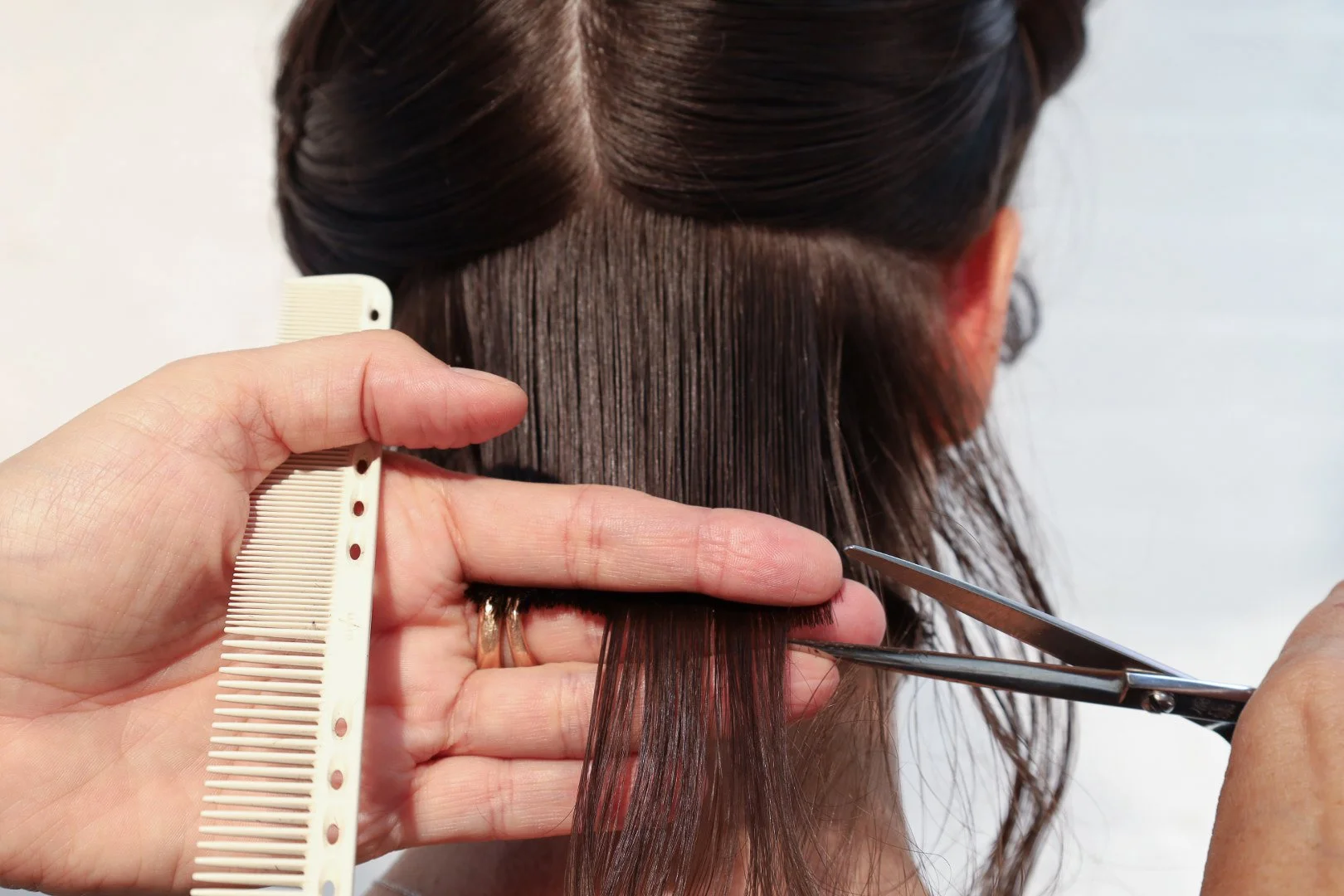
Why structure matter more than trends
Haircutting isn’t decoration — it’s architecture.
The scissor is the tool that allows you to design:
balance
structure
strength
movement
proportion
longevity
Most stylists were taught haircuts. Very few were taught structure.
That’s why so many cutters struggle with:
collapsing crowns
uneven lines
inconsistent weight
silhouettes that don’t last
hair that expands or shrinks unpredictably
shapes that only look good the day of
Structure is the difference between cutting hair and designing shape.
The Breakroom teaches the latter.
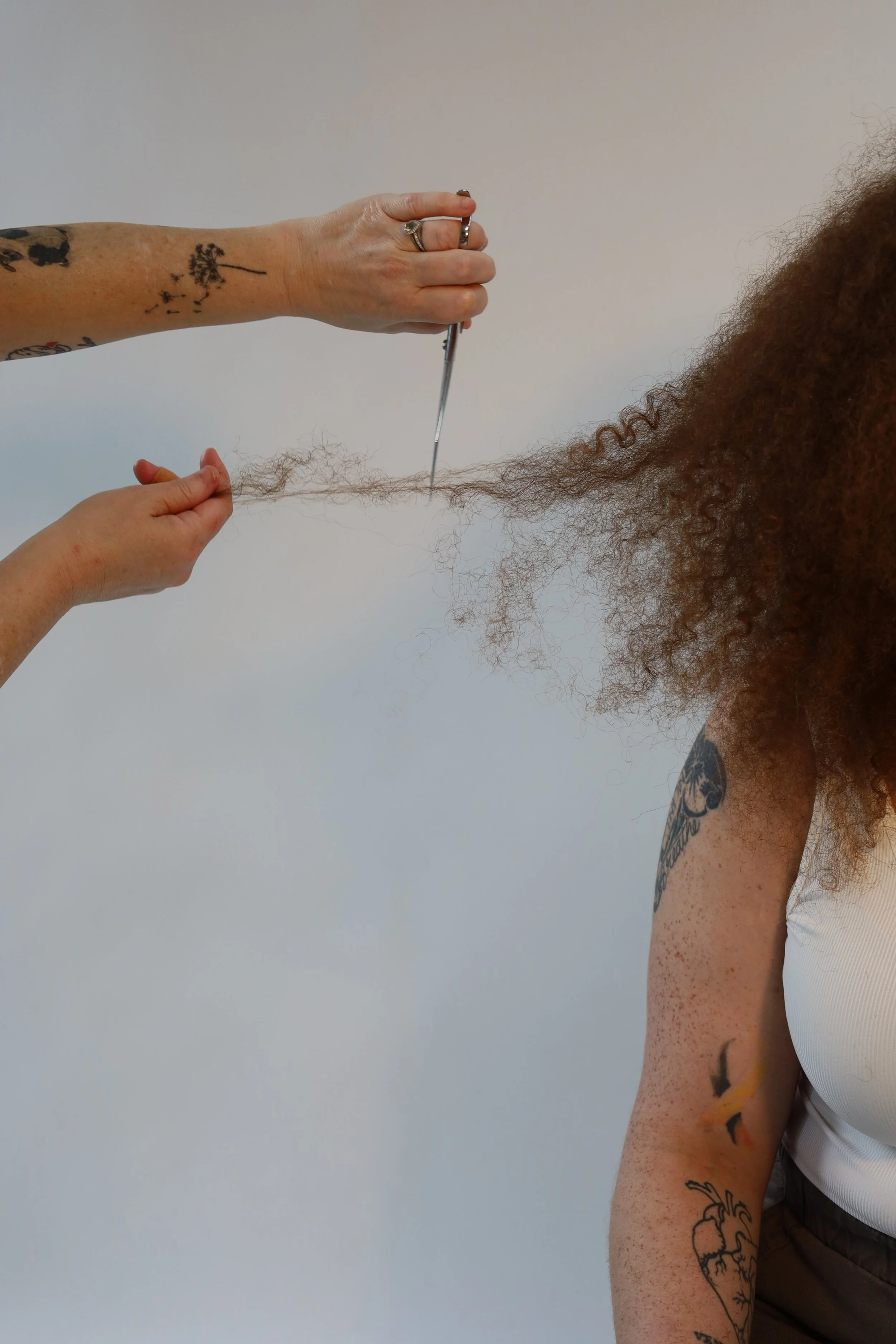
What makes the BreakRoom Scissor Method different
A Philosophy Rooted in Architecture, Awareness, and Intention. Most scissor education teaches technique. We teach decision-making. Below is what sets our method apart:
Form comes first
1
Before technique, before tools, before trends — shape is the priority. We teach cutters to design silhouette first, then build it with intention.
Lines + weight = language
2
Every scissor cut is built from:
lines (direction)
weight (strength)
Mastery comes from knowing how to manipulate both.
Technique should solve a problem
3
A good haircut doesn’t follow steps.
It responds to:
growth patterns
proportions
movement
lifestyle
personality
We teach stylists how to diagnose and respond, not memorize.
Scissor work is about control, not speed
4
Slow hands lead to clean lines. Clear posture leads to predictable structure. Intentional rhythm leads to consistency. We teach scissor work the way musicians learn scales — precise, repeatable, embodied.

The foundations of structural haircutting
The architecture behind every great haircut. These six foundations form the backbone of the BreakRoom approach.
1
Lines
Lines dictate:
• direction
• balance
• silhouette
• attitude
We teach stylists to use:
• horizontal lines (weight + stability)
• vertical lines (softness + removal)
• diagonal lines (movement + flow)
2
Elevation
Elevation determines:
• weight distribution
• graduation
• layering
• softness vs structure
It is one of the most powerful tools in haircutting.
3
Over-direction
Over-direction builds:
• length
• asymmetry
• movement
• flow
Small changes = dramatic impact.
4
Tension
Tension affects:
• strength
• line quality
• consistency
• balance
Too much → collapse.
Too little → inconsistency.
5
Distribution of weight
Weight is the soul of a haircut. We teach stylists to map weight like sculptors:
• where it lives
• where it travels
• where it must be removed
• where it must be protected
6
Density awareness
Texture is not the same as density. Density determines:
• section size
• elevation decisions
• line strength
• technique choice
We teach density first — everything builds from it.

The BreakRoom Scissor System
Precision cutting for the modern hairdresser: Our method integrates mechanics, vision, and nervous system awareness.
Finger placement influences:
tension
angle
movement
fatigue
A healthy, balanced grip creates precision.
Grip + control
Each blade movement has intention. We teach blade paths the way architects learn drafting.
Cutting path
Your feet, hips, shoulders, and line of sight determine the haircut more than your scissors. Your body is your first cutting tool.
Body positioning
Rushing destroys structure. We teach cutters to build consistent, predictable rhythm — the heartbeat of clean shapes.
Rhythm + pace
Sectioning isn’t organization — it’s a map.
We teach:
macro-sectioning (silhouette)
micro-sectioning (detail)
directional sectioning (flow)
corrective sectioning (problem-solving)
Sectioning strategy

Structural cutting by length & texture
Requires clarity, crown control, and precision in movement.
Short hair
Shape, balance, perimeter strength, and graduation alignment.
Bobs
Mid-lengths
Flow, internal structure, transitions, adaptability.
Long hair
Movement, invisible structure, perimeter preservation.
Balance, shrinkage awareness, pattern respect, weight mapping.
Curly + coily Hair
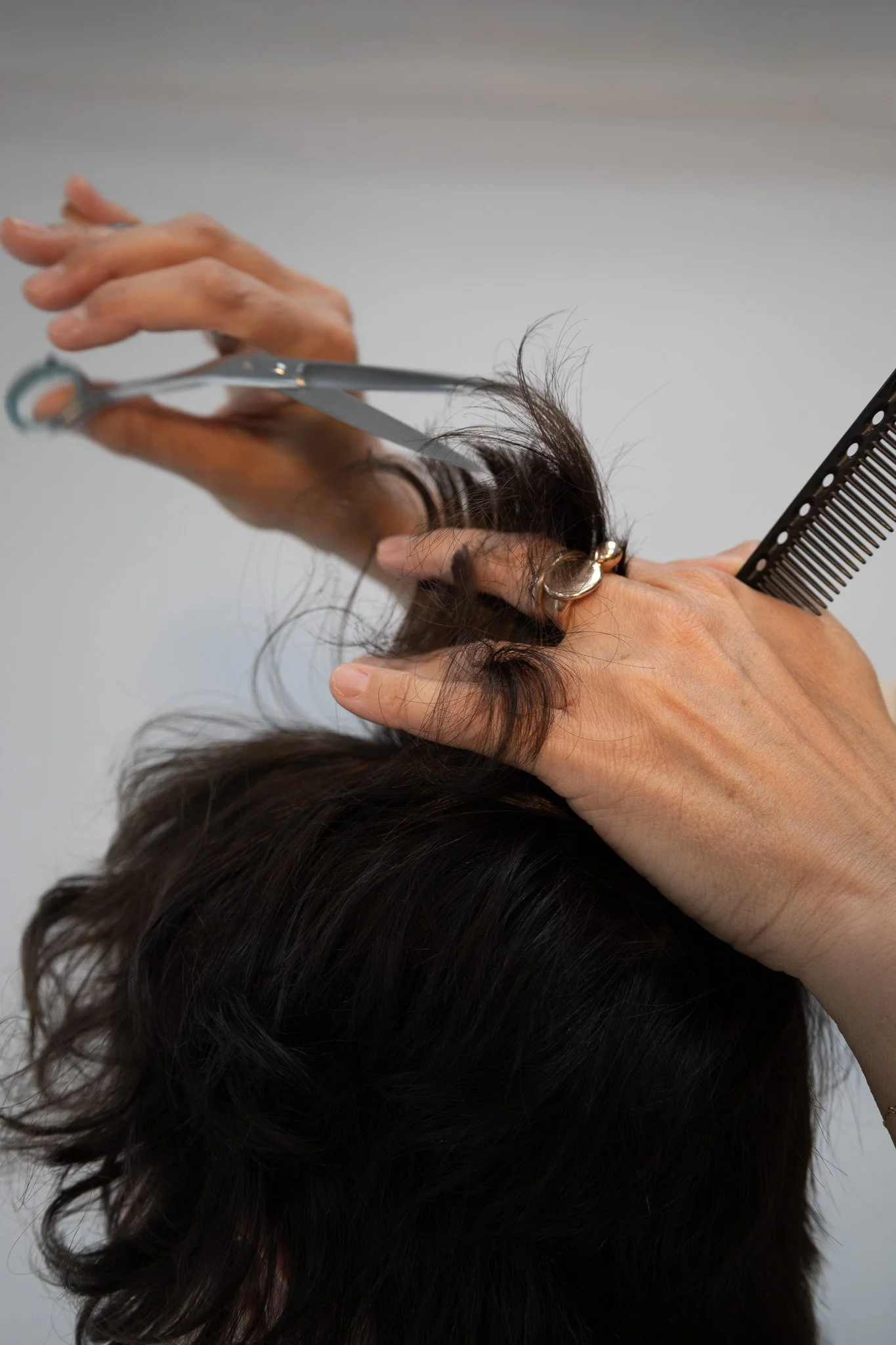
Common scissor mistakes (and how we fix them)
→ adjust elevation + tension and weight removal
Heavy lines
→ add internal support
Collapsed crowns
→ refine rhythm + pressure
Harsh perimeters
→ adjust body position + visual checkpoints
Uneven shapes
→ strengthen density awareness
Inconsistent weight
→ refine over-direction
Flat movement
We fix the root cause, not the symptom.
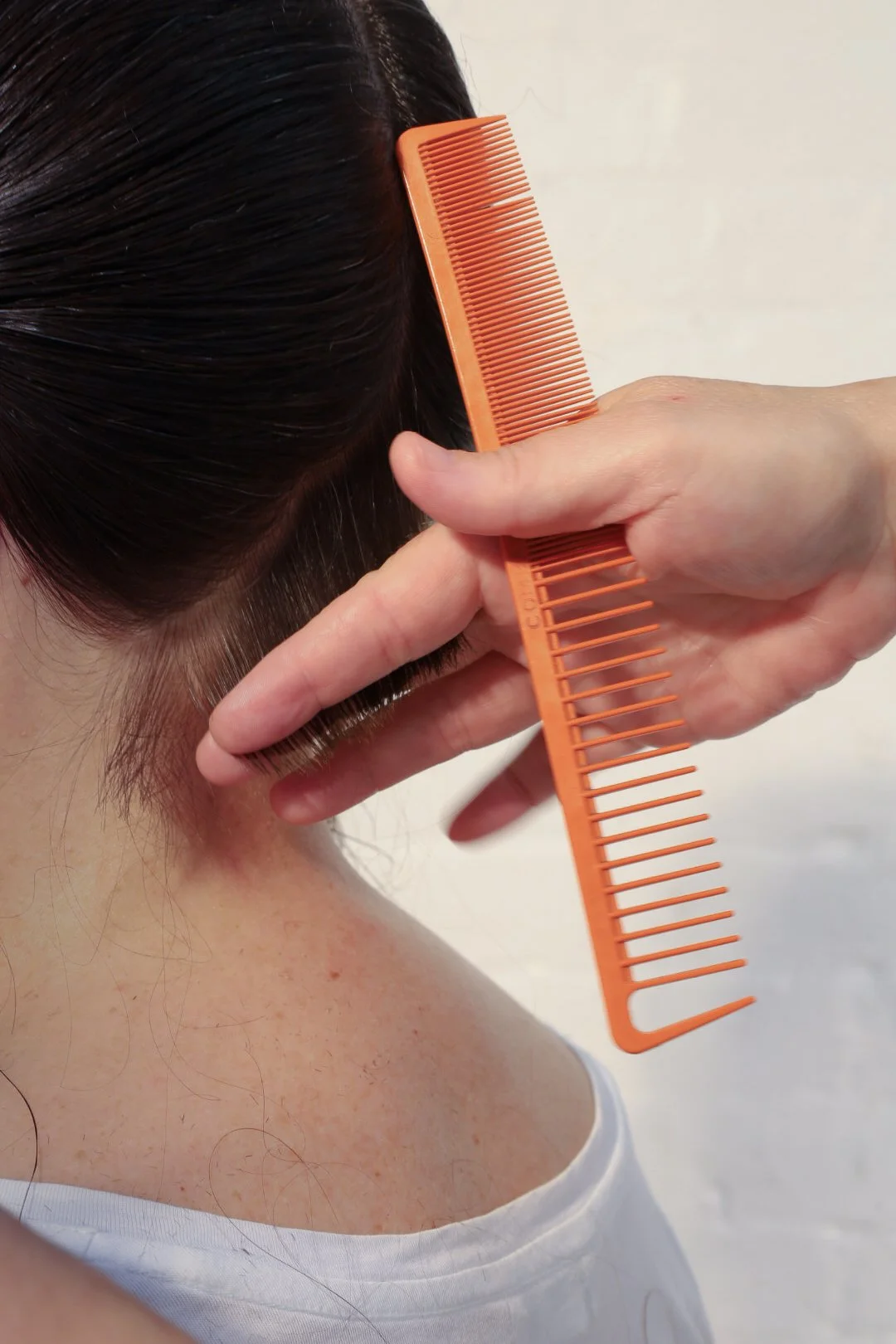
How the BreakRoom teaches scissor work
What it’s like to learn structural cutting the BreakRoom way.
Our teaching blends:
clear demonstration
guided repetition
hands-on correction
emotional regulation
mistake-driven learning
visual intelligence training
conceptual drills
Stylists leave with clarity they’ve never had before.
Precision isn’t an accident — it’s a method
The Breakroom’s approach to scissor work is grounded in:
architecture
body mechanics
intentional movement
visual mastery
emotional steadiness
This is where technique meets understanding, and understanding becomes mastery. You don’t just cut hair differently — you see differently. You think differently. You work differently.
This is the Breakroom way.