
The Complete Guide to Razor Cutting
The BreakRoom Method for modern hairdressers
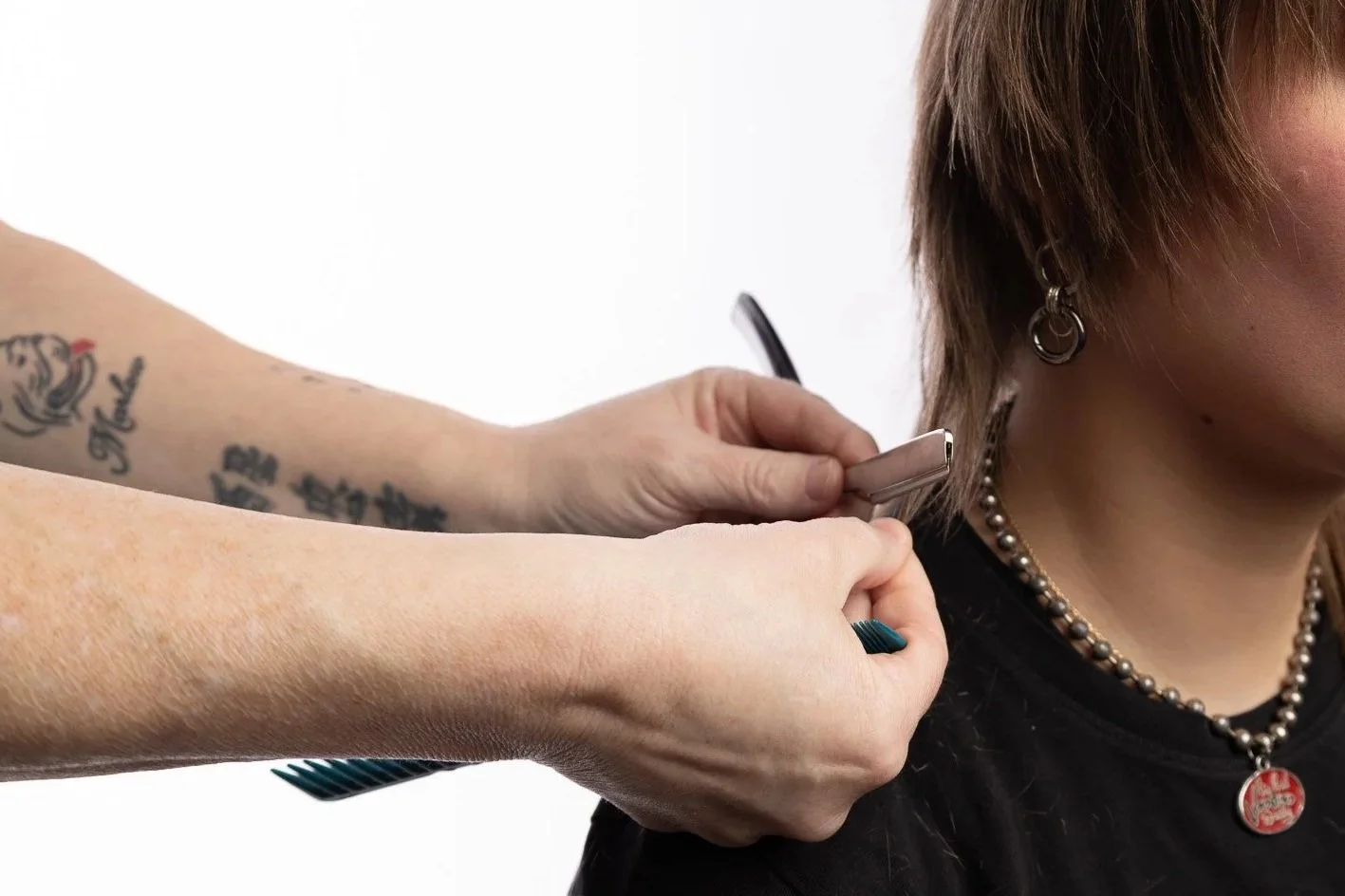
Why razor cutting
matters now
Razor cutting has been misunderstood for decades. Some stylists fear it. Others swear by it. Most were never actually taught how to use it correctly. But here’s the truth:
A razor is not a trend — it’s a tool. One of the most expressive, technical, and powerful tools in the craft.
Used correctly, razor cutting creates:
softness
movement
flow
internal structure
airiness
modern silhouettes
Used incorrectly, it creates:
collapse
frizz
holes
imbalance
harsh surfaces
The Breakroom Method trains stylists to use the razor with precision, control, intention, and deep structural understanding — not guesswork.

What makes the BreakRoom Razor Method unique
The Breakroom Razor Philosophy
Most razor education teaches:
random texture
trend-based cuts
decorative strokes
We teach razor cutting as a blend of:
architecture
artistry
emotional intelligence
neuroscience
structural design
Below is what makes our method different:
We teach stylists to use the razor to build shape, move weight, and design movement, not just “add texture.”
1
Texture is not the goal — structure is.
Everything changes with:
stroke length
angle
tension
pressure
rhythm
section hydration
Small adjustments create massive differences in the result.
2
Razor mechanics matter.
Including:
no sawing
no random surface strokes
no crown collapsing
no perimeter shredding
We replace bad habits with clarity and control.
3
We correct industry mythology.
We pair technique with learning science.
4
Slow reps. Clear demonstrations. Pattern recognition. Mistake-driven learning. Emotional regulation. Real-time correction. This accelerates mastery.
Understanding your tool
Great razor work begins with knowing your instrument.
The razor: what every stylist should know
Guarded: soft, forgiving, beginner-friendly, great for fragile hair.
Unguarded: precise, expressive, clean — requires training but delivers unmatched results.
Guarded vs non-guarded razors
A dull blade causes drag, frizz, and collapsed structure. A fresh blade creates glide, softness, and clean architecture.
Blade freshness
More exposure = more removal.
Less exposure = softer effect.
Blade exposure/ angle
These influence your control, rhythm, and accuracy.
Grip, balance, and weight

The six BreakRoom razor strokes
1
Short stroke
Precise, controlled, minimal removal. Essential for strong perimeters and detailing.
2
Medium stroke
Versatile, balanced, used through most shapes.
3
Long stroke
Expressive, bold, opens the shape and creates movement + softness.
4
Floating/ light stroke
Barely touches the hair — perfect for subtle softness, fringes, and face frames.
5
Weight removal sweep
Moves weight without removing length. Essential for crown, nape, and dense areas.
6
Expansion/ broad stroke
Creates airiness, volume, and modern silhouettes. Especially powerful on wavy + long hair.
Foundational principles
Determines removal and texture quality.
Clean glide angle = beautiful movement.
Steep angle = aggressive removal.
Angle
Light, even tension is the BreakRoom rule.
Too much → collapse.
Too little → frizz and inconsistency.
Tension
Elevation controls:
weight
silhouette
strength
softness
movement
It is one of the most important decisions you make when using a razor.
Elevation
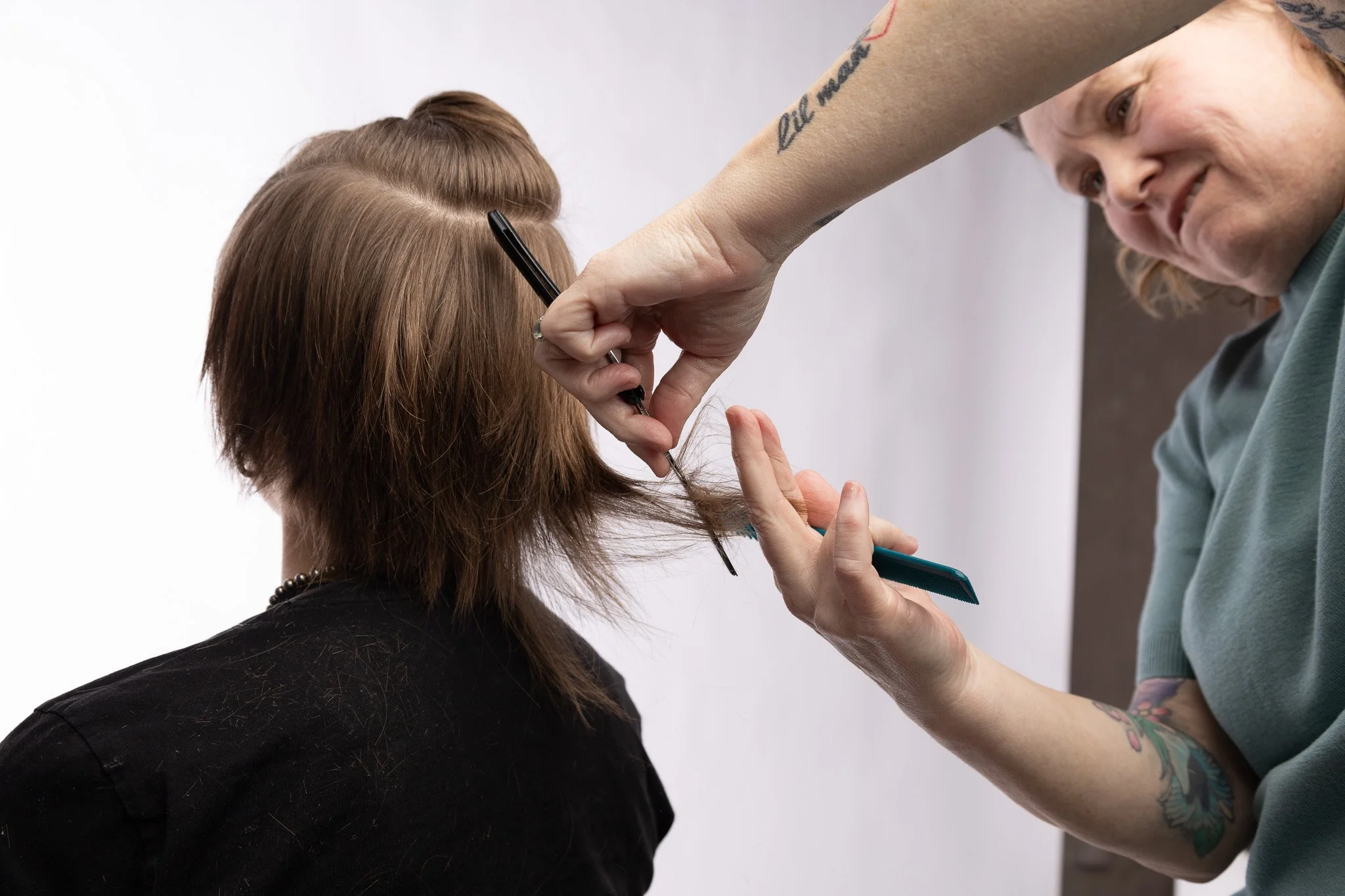
Razor cutting by hair type
Highly revealing. Requires intentional stroke length and clean mechanics.
Straight hair
Responds beautifully to long strokes, expansion, and controlled movement.
Wavy hair
Can be razor cut safely and beautifully when respecting pattern, shrinkage, and internal support.
Curly hair
Yes — it can be razor cut with mastery. Requires hydration, caution with angle, and strong understanding of structure.
Coily/highly textured hair

Common mistakes (and how we fix them)
Fixed with: angle, rhythm, blade glide.
Sawing
Fixed with: weight removal sweep, elevation control, structural awareness.
Overtexturizing the crown
Fixed with: fresh blades, hydration, proper pressure and tension.
Frizz + shredded ends
Fixed with: consistent tension, intentional stroke mapping, flow created by wrist movements.
Holes in the shape
Fixed with: short strokes, perimeter protection, angle refinement.
Collapsed perimeters
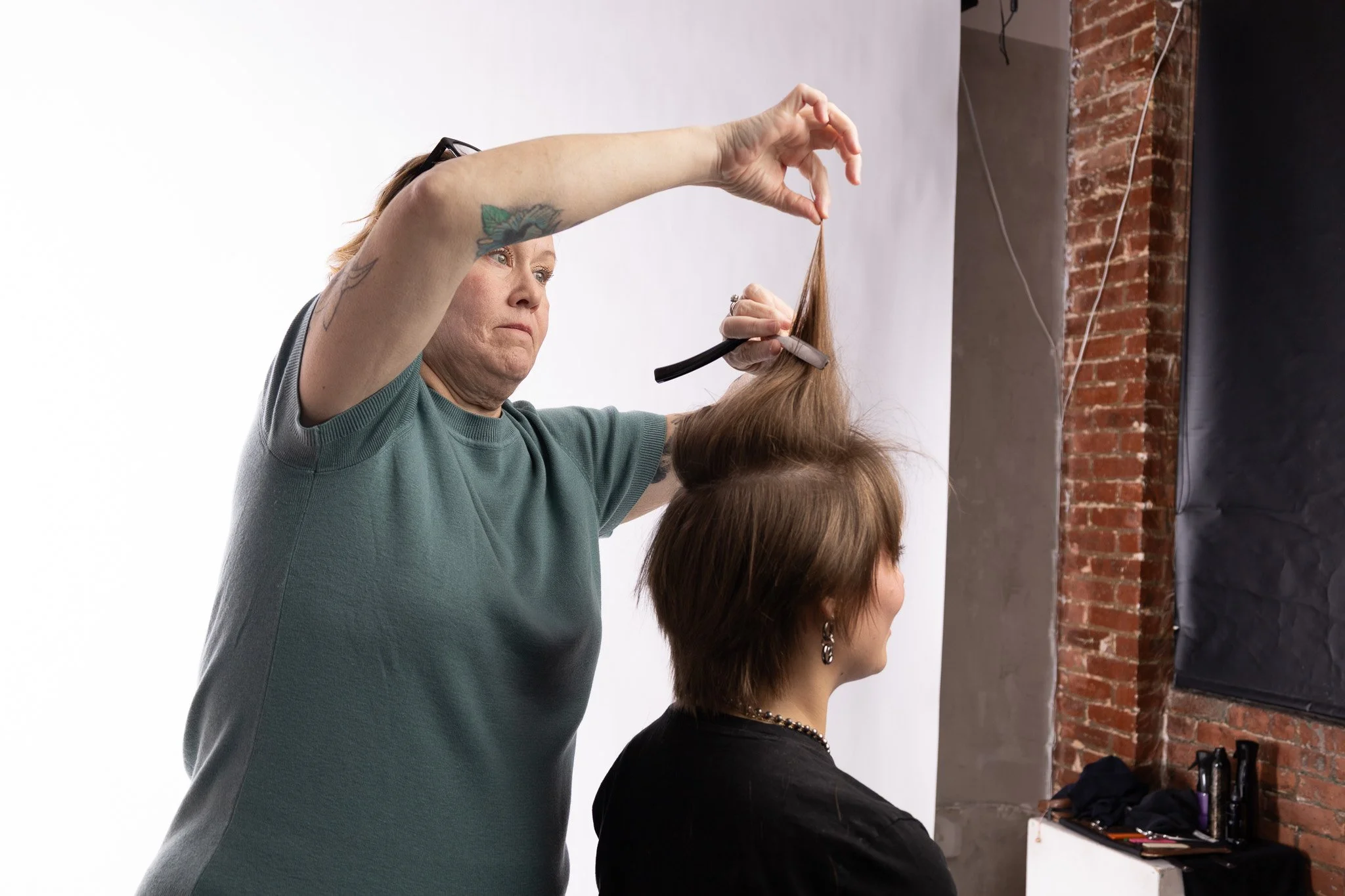
How the BreakRoom teaches the razor
We train razor cutting through:
slow, clear, narrated demonstration
hands-on practice with correction
learning science layer-by-layer
emotional regulation
visual intelligence training
internal weight mapping
clean, repeatable frameworks
Our students don’t just “use” the razor — they understand it. They respect it. They master it.
The razor is a language — we teach you to speak it.
The Breakroom Method transforms razor cutting from something stylists “try” into something they control, understand, and command with confidence.
This is modern craftsmanship: precise, thoughtful, informed, and expressive.